Table of Contents
ToggleSwimming is one of the oldest and most valuable physical activities humans practice. This full-body exercise involves moving through water using coordinated arm and leg movements. Millions of people swim for fitness, recreation, competition, and survival. Whether someone wants to stay active, learn water safety, or compete at elite levels, swimming offers something for everyone.
This guide explains what swimming is and why it matters. It covers how the body moves through water, the health benefits swimmers gain, popular strokes and techniques, and practical ways to start. By the end, readers will understand why swimming remains an essential life skill across all ages and fitness levels.
Key Takeaways
- Swimming is a full-body exercise that engages all major muscle groups while building cardiovascular endurance with minimal joint impact.
- The four main swimming strokes—freestyle, breaststroke, backstroke, and butterfly—each offer unique benefits for different skill levels and fitness goals.
- Regular swimming improves both physical and mental health, including better muscle tone, flexibility, reduced stress, and improved sleep quality.
- Swimming is a critical life skill that significantly reduces the risk of drowning, especially for children.
- Beginners can start swimming with minimal equipment and should take lessons, practice consistently, and build endurance gradually for best results.
How Swimming Works as a Physical Activity
Swimming requires the body to push against water resistance while staying afloat. This creates a workout unlike any land-based exercise. Water is about 800 times denser than air, so every movement demands significant effort from muscles throughout the body.
The basic mechanics of swimming involve three key elements: propulsion, buoyancy, and breathing coordination. Propulsion comes from pulling and pushing movements with the arms and kicking with the legs. Buoyancy helps the body float, reducing stress on joints while still challenging muscles. Breathing must sync with stroke patterns to maintain rhythm and efficiency.
When someone swims, they engage major muscle groups simultaneously. The core stabilizes the body. The shoulders, back, and arms generate forward momentum. The legs and glutes provide additional power through kicking. This full-body engagement makes swimming an efficient calorie-burning activity.
Swimming also works the cardiovascular system hard. The heart pumps faster to deliver oxygen to working muscles. Over time, regular swimming strengthens the heart and improves lung capacity. Many swimmers notice they can hold their breath longer and recover faster from physical exertion.
Health Benefits of Swimming
The health benefits of swimming extend far beyond basic fitness. Research consistently shows that swimming improves physical and mental well-being across multiple areas.
Physical Health Benefits
Swimming builds cardiovascular endurance without the joint impact of running or jumping. The water supports body weight, making it ideal for people with arthritis, injuries, or chronic pain conditions. A 30-minute swimming session can burn 200 to 400 calories depending on intensity and stroke choice.
Muscle tone improves with regular swimming because water resistance challenges muscles throughout their full range of motion. Flexibility also increases since swimming requires extended reaching and stretching movements. Studies show that swimmers often maintain better posture than non-swimmers.
Mental Health Benefits
Swimming triggers the release of endorphins, the brain’s natural mood boosters. The rhythmic nature of strokes and breathing creates a meditative effect that reduces stress. Many swimmers describe the water as calming and report lower anxiety levels after pool sessions.
Sleep quality often improves for regular swimmers. The physical exertion combined with the relaxing properties of water helps people fall asleep faster and sleep more deeply. For older adults, swimming has been linked to better cognitive function and reduced risk of age-related mental decline.
Common Swimming Strokes and Techniques
Four main swimming strokes dominate pools worldwide. Each stroke has distinct characteristics that suit different purposes and skill levels.
Freestyle (Front Crawl)
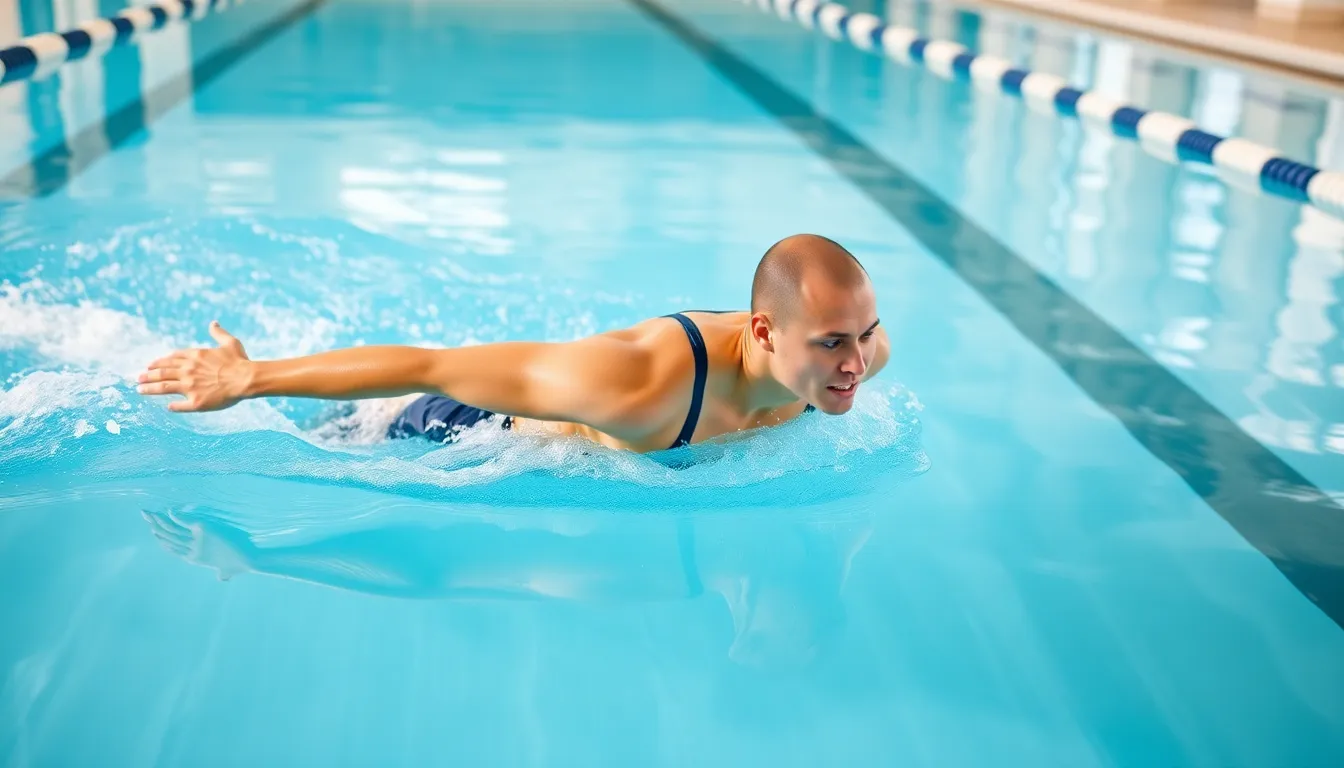
Freestyle is the fastest and most popular swimming stroke. Swimmers lie face-down and alternate arm pulls while flutter kicking. Breathing happens by turning the head to the side during arm recovery. Most beginners learn freestyle first because it offers an efficient balance of speed and energy conservation.
Breaststroke
Breaststroke involves a frog-like kick combined with simultaneous arm movements that pull outward and then sweep back together. The head rises above water for each breath cycle. This stroke is slower than freestyle but allows swimmers to see where they are going. Many people find breaststroke easier to learn initially.
Backstroke
Backstroke is the only competitive stroke swum on the back. Arms alternate in windmill motions while legs perform a flutter kick. Breathing is unrestricted since the face stays above water. Backstroke provides excellent shoulder and back muscle development.
Butterfly
Butterfly demands the most strength and coordination. Both arms move simultaneously in a circular motion while the legs perform a dolphin kick. This stroke requires good timing and significant upper body power. Competitive swimmers often consider butterfly the most challenging stroke to master.
Swimming for Different Purposes
People swim for various reasons, and the activity adapts well to multiple goals.
Recreational Swimming
Recreational swimming focuses on enjoyment and light exercise. Families visit pools and beaches for leisure activities. Casual swimmers might not follow strict techniques but still gain fitness benefits from time in the water.
Competitive Swimming
Competitive swimming takes place at local, national, and Olympic levels. Athletes train intensively to shave fractions of seconds off their times. Competitive swimmers follow strict training programs and focus on perfecting stroke mechanics. Swimming has been an Olympic sport since 1896.
Fitness and Exercise
Many people use swimming as their primary workout routine. Lap swimming provides structured exercise that tracks easily by distance or time. Water aerobics classes combine swimming movements with group fitness instruction. Swimming offers an excellent option for cross-training athletes in other sports.
Water Safety and Survival
Swimming is fundamentally a survival skill. Knowing how to swim can prevent drowning accidents. The CDC reports that drowning is a leading cause of unintentional death, especially for children. Learning to swim reduces this risk significantly and builds water confidence.
How to Get Started With Swimming
Starting a swimming practice requires minimal equipment and basic preparation. Here are practical steps for beginners.
Find a Pool or Safe Swimming Location
Local community centers, gyms, and schools often have pools with public swim hours. Outdoor options include beaches, lakes, and designated swimming areas. Beginners should always swim in supervised locations with lifeguards present.
Get Basic Equipment
A swimsuit is the only essential item. Goggles protect eyes and improve underwater vision. Swim caps keep hair out of the face and reduce drag. Kickboards and pull buoys help beginners practice specific movements.
Take Lessons
Swimming lessons accelerate progress for people of all ages. Certified instructors teach proper technique and water safety skills. Group classes offer affordable options, while private lessons provide personalized attention. Many pools offer adult beginner classes for those who never learned as children.
Start Slowly
New swimmers should build endurance gradually. Beginning with short sessions of 15 to 20 minutes prevents exhaustion and allows the body to adapt. Focusing on one stroke at first helps develop muscle memory before adding variety.
Practice Consistently
Swimming skills improve with regular practice. Two to three sessions per week provide enough frequency for steady progress. Setting small goals, like swimming one more lap each week, keeps motivation high.