Table of Contents
ToggleTop swimming skills separate confident swimmers from those who struggle in the water. Whether someone is learning their first stroke or training for competition, the right techniques make all the difference. Swimming offers a full-body workout, burns calories efficiently, and puts minimal stress on joints. Yet many swimmers plateau because they repeat the same mistakes or skip foundational skills.
This guide covers essential strokes, endurance-building strategies, common errors, and safety practices. Swimmers at every level will find practical advice to improve their performance. The goal is simple: spend less time fighting the water and more time gliding through it.
Key Takeaways
- Top swimming skills require mastering all four primary strokes—freestyle, backstroke, breaststroke, and butterfly—to build a well-rounded foundation.
- Interval training and drill work improve both endurance and speed more effectively than steady-state swimming alone.
- Common mistakes like lifting the head too high, kicking from the knees, and holding your breath underwater create drag and waste energy.
- Exhaling steadily underwater and practicing bilateral breathing promotes efficient gas exchange and balanced technique.
- Never swim alone and always understand your environment, whether it’s a pool, lake, or ocean, to ensure safety.
- Top swimming performance comes from consistent practice, intentional technique work, and prioritizing safety at all times.
Essential Swimming Strokes to Master
Every swimmer should learn four primary strokes. Each stroke serves different purposes and develops specific muscle groups.
Freestyle (Front Crawl)
Freestyle is the fastest and most efficient stroke. Swimmers lie face-down, kick with flutter kicks, and rotate their arms in an alternating windmill motion. Proper breathing involves turning the head to the side during the arm recovery phase. Most competitive swimmers and fitness enthusiasts favor this stroke for speed and calorie burn.
Key technique points include keeping the body flat, reaching forward with each stroke, and maintaining a steady kick from the hips rather than the knees.
Backstroke
Backstroke mirrors freestyle but swimmers face upward. This stroke is excellent for beginners because breathing happens naturally. It also strengthens back muscles and improves posture.
Swimmers should keep their hips high, point their toes, and avoid lifting their heads. Looking straight up at the ceiling or sky helps maintain proper body position.
Breaststroke
Breaststroke is slower but highly technical. Swimmers push their arms forward, sweep them outward, then pull back toward the chest. The frog kick accompanies this arm movement. Timing matters, the glide phase between strokes allows rest and forward momentum.
Many recreational swimmers prefer breaststroke because it allows easy breathing and conversation. Competitive swimmers appreciate its technical challenge.
Butterfly
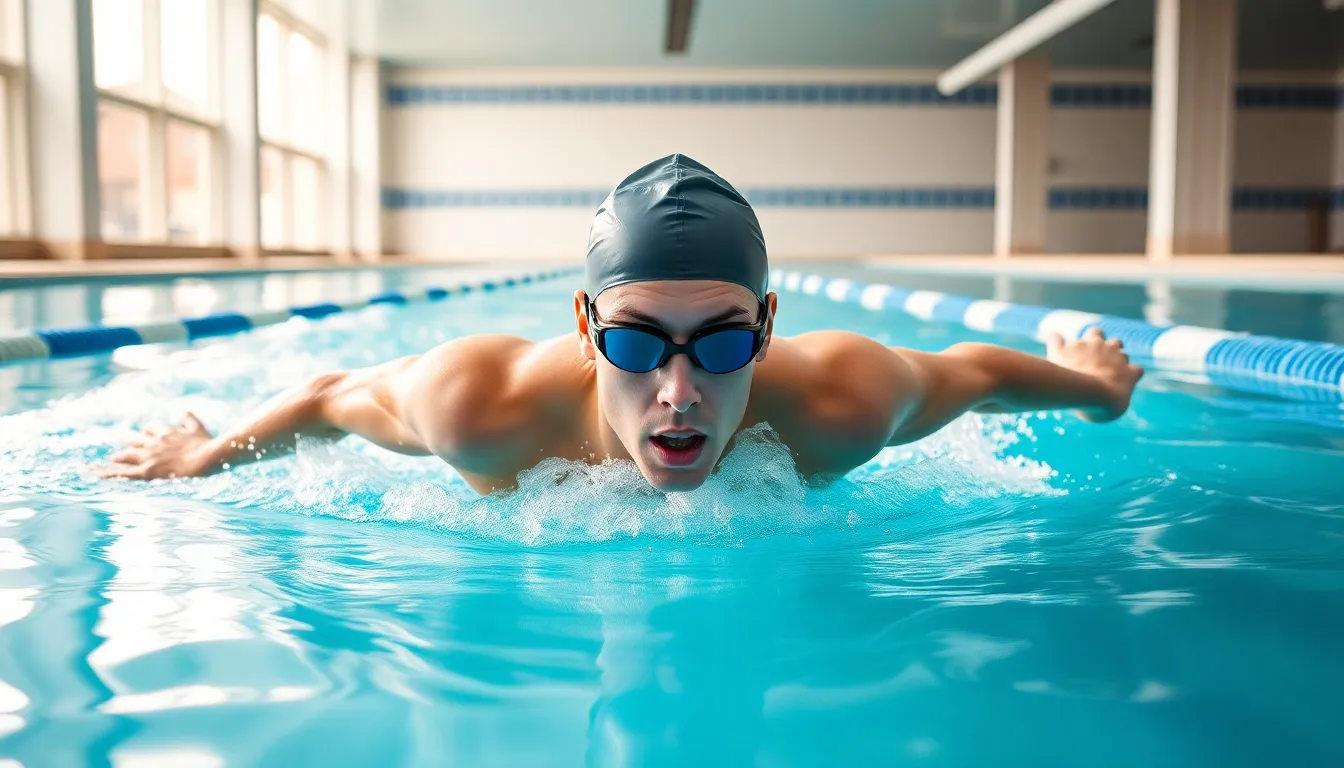
Butterfly demands strength and coordination. Both arms move simultaneously in a circular motion while the legs perform a dolphin kick. This stroke burns the most calories and builds impressive upper body power.
Beginners often find butterfly exhausting. Starting with single-arm drills and dolphin kick practice helps build the required strength and rhythm.
Mastering all four strokes creates a well-rounded swimmer. Each stroke targets different muscles, so rotating between them prevents overuse injuries and keeps workouts interesting.
Building Endurance and Speed in the Water
Swimming faster and longer requires smart training strategies. Raw effort alone won’t cut it.
Interval Training
Interval training alternates high-intensity swimming with rest periods. A swimmer might sprint 50 meters, rest for 30 seconds, then repeat. This approach builds cardiovascular fitness faster than steady-state swimming.
Beginners can start with shorter intervals, 25 meters with 45 seconds rest. As fitness improves, swimmers extend distances and shorten rest periods.
Drill Work
Drills isolate specific movements and improve technique. Catch-up drill (one arm waits while the other completes a full stroke) teaches proper rotation. Kick drills with a board strengthen leg muscles. Fist drill (swimming with closed fists) heightens feel for the water.
Spending 15-20% of each workout on drills pays dividends in overall speed. Better technique means less wasted energy.
Progressive Overload
Swimmers should gradually increase total distance, intensity, or frequency. Adding 10% more distance each week challenges the body without causing burnout. Tracking workouts in a log helps monitor progress and prevents stagnation.
Breathing Efficiency
Inefficient breathing slows swimmers down. Exhaling underwater (rather than holding breath) allows quick inhales at the surface. Bilateral breathing, alternating the breathing side every three strokes, promotes balanced technique and prepares swimmers for open water conditions.
Top swimming performance comes from consistent practice combined with intentional technique work. Swimmers who rush through workouts without focus rarely see significant improvement.
Common Mistakes to Avoid While Swimming
Even experienced swimmers develop bad habits. Identifying and correcting these errors accelerates progress.
Lifting the Head Too High
Raising the head to breathe causes the hips and legs to sink. This creates drag and wastes energy. Swimmers should rotate the body and turn the head just enough for one eye to clear the water. The waterline should hit the middle of the face.
Overreaching on Entry
Some swimmers slam their hands into the water too far in front. This causes shoulder strain and reduces power. The hand should enter the water at a slight angle, fingertips first, about shoulder-width apart.
Kicking From the Knees
A common error involves bending the knees too much during flutter kick. This “bicycle kick” creates minimal propulsion. Proper kicks originate from the hips with relatively straight legs and loose ankles.
Holding Breath Underwater
Many swimmers inhale, hold their breath, then exhale and inhale quickly at the surface. This pattern causes oxygen debt and breathlessness. Exhaling steadily through the nose underwater allows efficient gas exchange.
Neglecting Streamlining
The body position after pushing off the wall matters significantly. Swimmers who skip proper streamlining lose free speed. Squeezing the arms tight against the ears, stacking hands, and holding a tight line reduces drag during push-offs and turns.
Video analysis helps swimmers spot these mistakes. Recording a few laps and reviewing footage reveals issues that feel invisible while swimming.
Safety Tips for Swimmers
Swimming is generally safe, but accidents happen. Following basic precautions prevents most problems.
Never Swim Alone
Even strong swimmers can experience cramps, exhaustion, or medical emergencies. Having a buddy or swimming where lifeguards are present provides essential backup. Solo swimmers in pools should inform someone of their plans.
Know Personal Limits
Pushing too hard leads to exhaustion and panic. Swimmers should stay within their comfort zone, especially in unfamiliar waters. Deep water and strong currents require extra caution and experience.
Understand the Environment
Pools, lakes, and oceans present different challenges. Chlorinated pools offer controlled conditions. Open water introduces currents, temperature variations, wildlife, and limited visibility. Checking conditions before entering any body of water is essential.
Learn Basic Rescue Techniques
Knowing how to float on the back conserves energy during emergencies. Understanding how to help others without endangering oneself, using reaching assists or throwing flotation devices, saves lives. Formal water safety courses teach these skills thoroughly.
Stay Hydrated and Fueled
Swimmers sweat even in water. Dehydration causes cramps and fatigue. Drinking water before and after sessions maintains performance. Eating a light meal 1-2 hours before swimming provides energy without causing stomach discomfort.
Top swimming experiences happen when safety remains a priority. Taking shortcuts with safety puts swimmers and others at risk.