Table of Contents
ToggleSwimming techniques determine how fast, efficient, and comfortable a swimmer moves through the water. Whether someone swims for fitness, competition, or recreation, mastering proper form makes every lap count. The four main strokes, freestyle, backstroke, breaststroke, and butterfly, each require specific body positions, arm movements, and kick patterns. Learning these swimming techniques correctly prevents injury, builds endurance, and improves speed. This guide breaks down each stroke’s mechanics, highlights common errors, and offers practical fixes swimmers can apply immediately.
Key Takeaways
- Mastering the four main swimming techniques—freestyle, backstroke, breaststroke, and butterfly—improves speed, efficiency, and prevents injury.
- Proper body rotation (30–45 degrees) in freestyle and backstroke increases power while reducing shoulder strain.
- All swimming strokes require kicking from the hips, not the knees, to maximize propulsion and minimize wasted energy.
- Breaststroke success depends on precise timing: pull, breathe, kick, glide—rushing eliminates the glide phase and kills momentum.
- Butterfly demands full-body undulation with two dolphin kicks per arm cycle to maintain rhythm and conserve energy.
- Video analysis helps swimmers identify technique errors that feel invisible in the water, accelerating improvement across all strokes.
Freestyle: The Fastest and Most Efficient Stroke
Freestyle remains the go-to stroke for most swimmers because it covers distance quickly with minimal energy. The body stays horizontal, face down, with hips and shoulders rotating as each arm pulls through the water.
Proper freestyle swimming techniques start with the arm stroke. Each arm enters the water fingertips first, about shoulder-width apart. The hand then catches the water and pulls straight back toward the hip. Keeping elbows high during the pull phase generates more power. As one arm recovers above the water, the other arm begins its pull.
The flutter kick powers freestyle from the hips, not the knees. Swimmers should keep legs relatively straight with relaxed ankles. Small, fast kicks work better than big, splashy ones. Most coaches recommend six kicks per arm cycle for sprints and two kicks per cycle for distance events.
Breathing fits into the stroke rhythm. Swimmers turn their head to the side, not lift it, during the arm recovery phase. Bilateral breathing (alternating sides every three strokes) promotes balanced muscle development. Exhaling underwater through the nose or mouth prepares the lungs for a quick inhale at the surface.
Body rotation ties everything together. The torso should roll about 30 to 45 degrees with each stroke. This rotation extends reach, engages core muscles, and reduces shoulder strain.
Backstroke: Building Strength While Staying Relaxed
Backstroke flips the freestyle position, swimmers face upward and move in reverse. This stroke offers a breathing advantage since the face stays above water throughout.
Good backstroke swimming techniques begin with body position. The head stays still with eyes looking straight up. Ears should sit at water level. The body maintains a slight downward tilt from head to toe, keeping hips near the surface.
The arm motion alternates continuously. Each arm enters the water pinky-first, directly in line with the shoulder. The arm then sweeps down and outward in an S-pattern before pushing toward the thigh. A straight arm recovery swings over the water.
The flutter kick mirrors freestyle but faces upward. Knees should bend slightly on the upkick, and toes should break the surface. Kicking from the hips keeps the lower body streamlined.
Body rotation matters here too. Shoulders roll about 30 degrees with each arm entry. This rotation adds power to the pull and reduces drag. Many beginners stay too flat, rolling helps them swim faster with less effort.
One unique challenge: swimming straight without seeing forward. Swimmers use lane lines, ceiling markers, or backstroke flags (hung five meters from each wall) to track their position.
Breaststroke: Timing and Coordination Essentials
Breaststroke moves differently than the other strokes. It features a simultaneous arm pull and a frog-like kick, making timing critical.
Breaststroke swimming techniques demand precise coordination between arms and legs. The sequence goes: pull, breathe, kick, glide. Mixing up this order kills momentum and wastes energy.
The arm stroke starts with hands together, arms extended forward. Hands sweep outward and downward, then scoop inward toward the chest. The pull stays in front of the shoulders, reaching too far back creates drag. As hands come together under the chin, the head lifts for a breath.
The whip kick generates most of the stroke’s propulsion. Swimmers draw heels toward the buttocks with knees staying hip-width apart. Feet then turn outward (dorsiflexion) before snapping back together in a circular motion. The kick finishes with legs straight and feet together.
Glide time separates good breaststrokers from struggling ones. After each kick, the body should hold a streamlined position for a moment. Rushing into the next stroke cycle costs speed. Elite swimmers cover more distance per stroke by maximizing glide.
Head position affects the whole stroke. Lifting too high forces hips down, creating resistance. The chin should barely clear the water during the breath.
Butterfly: Power and Rhythm Combined
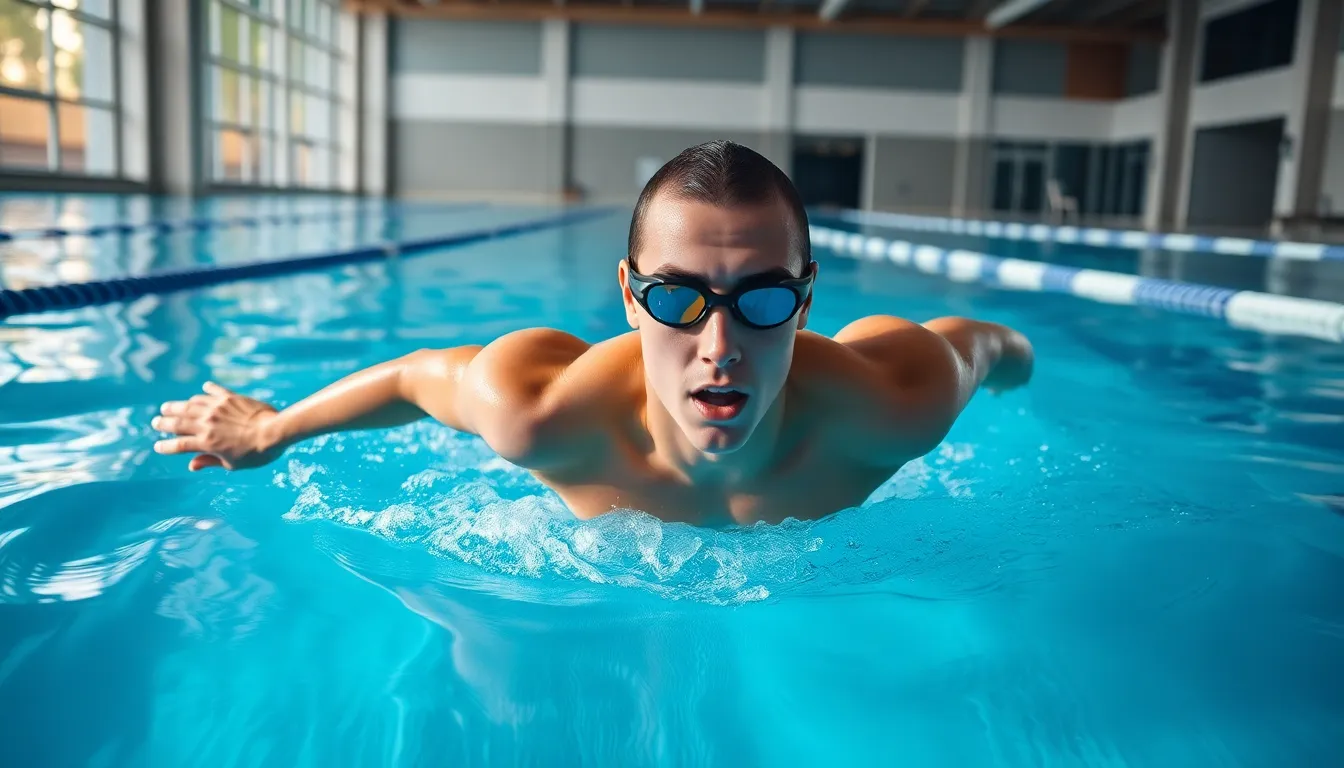
Butterfly looks impressive and feels demanding. Both arms move together, and both legs kick together in a dolphin motion. Rhythm makes or breaks this stroke.
Butterfly swimming techniques require full-body undulation. The movement starts at the chest, ripples through the core, and finishes at the feet. Think of a wave passing through the body.
The arm stroke follows a keyhole pattern underwater. Hands enter shoulder-width apart, thumbs first. Arms sweep outward, then pull down and inward toward the belly button, then push back toward the thighs. Recovery happens simultaneously, both arms swing forward over the water with relaxed elbows.
Two dolphin kicks occur per arm cycle. The first kick (smaller) happens during hand entry. The second kick (larger) happens during the arm push phase, propelling the body forward for recovery. Legs stay together with flexible ankles driving the motion.
Breathing happens as arms exit the water. The chin pushes forward, not up, to keep hips high. Some swimmers breathe every stroke: others breathe every other stroke to maintain better body position.
Butterfly exhausts swimmers quickly when technique breaks down. Maintaining rhythm conserves energy. Swimmers should focus on smooth, continuous motion rather than muscling through each stroke.
Common Mistakes and How to Fix Them
Even experienced swimmers develop bad habits. Recognizing these errors improves swimming techniques across all four strokes.
Head position problems affect every stroke. Lifting the head too high drops the hips, creating drag. Swimmers should keep their head neutral, looking down in freestyle, up in backstroke, and forward only briefly in breaststroke and butterfly.
Kicking from the knees wastes energy and slows swimmers down. All kicks should initiate from the hips with relatively straight legs. Bent-knee kicking creates turbulence without propulsion.
Crossing the midline during freestyle happens when arms enter the water past the center of the body. This causes the hips to snake side-to-side. Each hand should enter in line with its own shoulder.
Rushed timing in breaststroke eliminates the glide phase. Swimmers who immediately begin pulling after kicking never reach full speed. Patience between strokes pays off.
Flat body position in backstroke limits power. Without shoulder rotation, arms can’t pull effectively. Swimmers should feel their shoulders alternating above the water.
Inconsistent butterfly rhythm burns energy fast. When kicks fall out of sync with arm movements, the stroke becomes a struggle. Counting “kick-kick-pull” helps reestablish timing.
Video analysis helps swimmers spot these issues. Recording practice sessions reveals problems that feel invisible in the water.