Table of Contents
ToggleSwimming examples range from basic strokes to advanced competitive techniques. Whether someone is learning to swim for the first time or refining their form, understanding different strokes helps build confidence and efficiency in the water. Each swimming style serves a specific purpose, some prioritize speed, others focus on endurance, and a few work best for relaxation or rehabilitation.
This guide covers the four main swimming strokes: freestyle, backstroke, breaststroke, and butterfly. It also includes beginner-friendly drills that help new swimmers develop proper form. By the end, readers will have a clear picture of which swimming examples match their goals and skill level.
Key Takeaways
- Swimming examples include four main strokes—freestyle, backstroke, breaststroke, and butterfly—each serving different goals like speed, endurance, or relaxation.
- Freestyle is the fastest and most popular stroke, using alternating arm movements and a flutter kick that originates from the hips.
- Backstroke is ideal for swimmers with neck or back issues since the face stays above water and reduces spinal strain.
- Breaststroke requires precise timing of the pull-breathe-kick sequence and moves at a slower, more relaxed pace.
- Butterfly is the most demanding stroke, building exceptional core strength through its dolphin kick and simultaneous arm movements.
- Beginner-friendly drills like kickboard work and catch-up exercises help new swimmers develop proper technique before bad habits form.
Freestyle Swimming
Freestyle swimming remains the most popular stroke worldwide. Swimmers use it in competitions, lap workouts, and recreational sessions because it offers the fastest way to move through water.
Body Position and Arm Movement
The body stays horizontal with the face down in the water. Swimmers rotate slightly from side to side with each stroke. The arms alternate in a windmill motion, one arm pulls underwater while the other recovers above the surface.
A proper freestyle pull starts with the hand entering the water fingertips first. The arm extends forward, then sweeps down and back in an S-curve pattern. This motion generates propulsion. The elbow stays high during the recovery phase, which reduces drag and prevents shoulder strain.
Breathing and Kick
Breathing happens during the arm recovery. The swimmer turns their head to the side (not lifting it) and inhales quickly. Most swimmers breathe every two or three strokes. Bilateral breathing, alternating sides, helps maintain balance.
The flutter kick powers freestyle swimming. Legs stay relatively straight with relaxed ankles. The kick originates from the hips, not the knees. A steady six-beat kick (six kicks per arm cycle) works well for sprinting, while a two-beat kick conserves energy during distance swims.
Freestyle swimming examples in competitions include the 50-meter, 100-meter, and 1500-meter events. It’s also the stroke of choice for triathlon swim legs and open-water racing.
Backstroke Technique
Backstroke is the only competitive stroke performed on the back. This position makes breathing easier since the face stays above water throughout the swim.
Body Alignment
Swimmers float on their backs with ears submerged and eyes looking straight up. The hips sit high in the water, dropping them creates drag and slows momentum. A slight body rotation accompanies each arm stroke, similar to freestyle.
Arm and Leg Coordination
The arms move in an alternating pattern. One arm exits the water thumb-first and swings over in an arc. The hand enters pinky-first, then pulls down and pushes toward the hip. The opposite arm performs its pull simultaneously.
Backstroke uses a flutter kick identical to freestyle. Toes point and stay just below the surface. Splashing indicates the kick is too shallow or the knees are bending excessively.
These swimming examples show how backstroke benefits swimmers with neck or back issues. The supine position reduces strain on the spine. Many coaches recommend backstroke for active recovery between harder sets.
Breaststroke Fundamentals
Breaststroke moves slower than other competitive strokes, but it requires precise timing. The arms, legs, and breathing must synchronize perfectly.
The Pull-Breathe-Kick Sequence
Swimmers start in a streamlined position with arms extended forward. The hands sweep outward, then pull back toward the chest in a heart-shaped pattern. As the arms pull, the head lifts for a breath. The arms then shoot forward while the legs execute a whip kick.
The whip kick (or frog kick) provides most of the propulsion. Heels draw up toward the glutes, feet turn outward, and legs snap together. The body glides briefly before the next stroke cycle begins.
Common Mistakes
Many beginners pull their arms too far back, past the shoulders. This creates drag and wastes energy. The pull should stay compact, elbows never go behind the torso.
Another error involves lifting the head too high. Excessive head movement breaks the body’s streamline. Swimmers should lift just enough to clear the mouth for a breath.
Breaststroke swimming examples include the 100-meter and 200-meter Olympic events. Recreational swimmers often prefer this stroke because it allows easy breathing and a relaxed pace.
Butterfly Stroke
Butterfly demands strength, coordination, and endurance. It’s the second-fastest stroke after freestyle, but it exhausts swimmers quickly.
Dolphin Kick Foundation
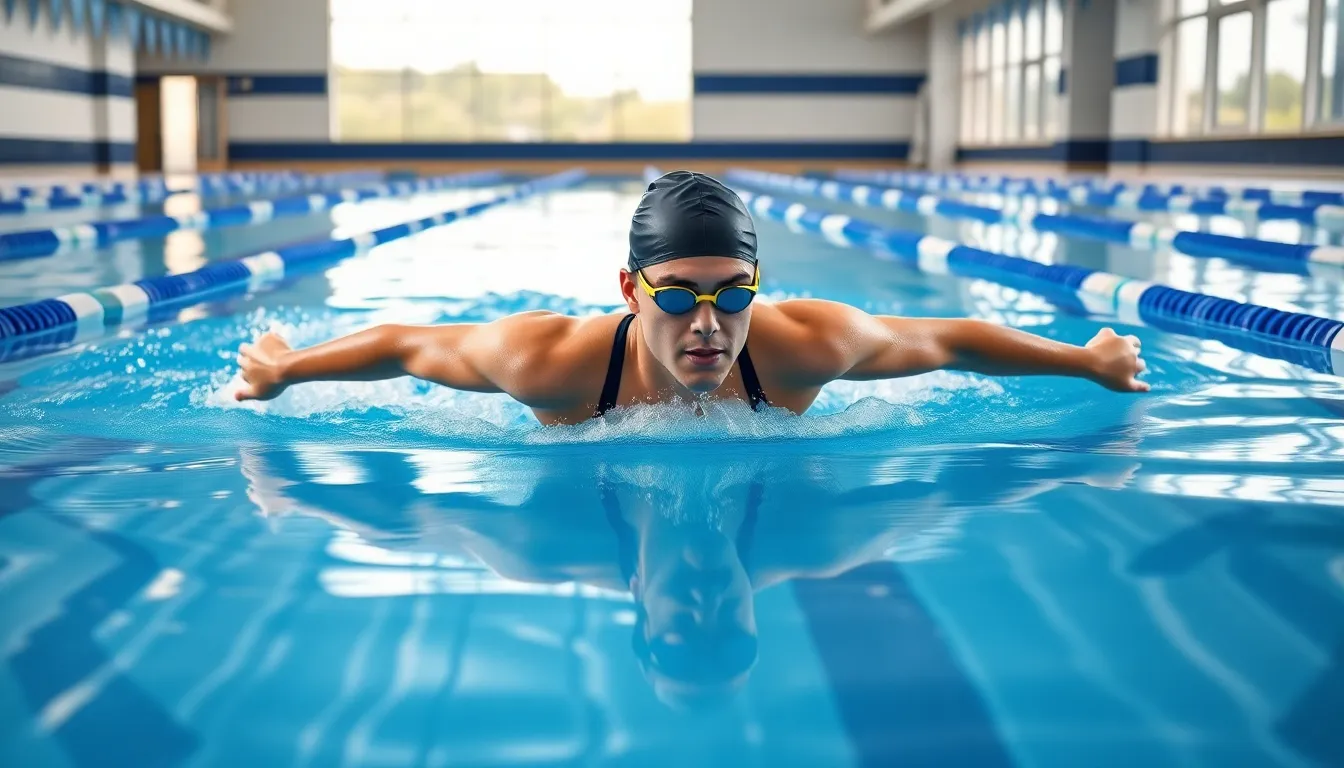
The dolphin kick powers butterfly. Both legs move together in a wave-like motion that starts at the chest and ripples through the hips, knees, and feet. Swimmers perform two kicks per arm cycle, one during the arm entry and one during the arm recovery.
Arm Movement and Timing
Both arms enter the water simultaneously, shoulder-width apart. They pull outward, then sweep inward in a keyhole pattern. The arms exit at the hips and recover over the water together.
Breathing occurs as the arms finish their pull. The chin stays near the water surface, lifting the head too high causes the hips to drop. Some swimmers breathe every stroke: others breathe every other stroke to maintain speed.
Butterfly swimming examples appear in 100-meter and 200-meter races. The individual medley (IM) also features butterfly as its first leg. Learning this stroke takes patience, but it builds exceptional core strength and cardiovascular fitness.
Beginner-Friendly Swimming Drills
New swimmers benefit from drills that isolate specific skills. These exercises build muscle memory before combining movements into full strokes.
Kickboard Work
Holding a kickboard lets swimmers focus entirely on their kick. They practice flutter kick, dolphin kick, or whip kick without worrying about arm coordination. Aim for 25-meter repeats with rest between sets.
Catch-Up Drill
This freestyle drill teaches timing. Swimmers complete one full arm stroke, then pause with both arms extended before starting the next stroke. The “catch-up” moment reinforces proper body rotation and prevents rushing.
Side Kick Drill
Swimmers kick on their side with one arm extended and the other resting on the hip. This drill emphasizes rotation and hip-driven propulsion. After 10-15 kicks, they take a stroke and switch sides.
Vertical Kicking
In deep water, swimmers kick in an upright position with arms crossed over the chest. This drill strengthens the kick and improves ankle flexibility. Start with 30-second intervals.
These swimming examples help beginners develop proper technique before bad habits form. Consistent drill work accelerates learning and reduces frustration.