Table of Contents
ToggleLearning surfing techniques is the first step toward riding waves with confidence. Every surfer, from weekend hobbyists to professionals, started by mastering the same foundational skills. The ocean doesn’t care about experience level, it rewards those who understand how to work with it.
Beginners often feel overwhelmed when they first paddle out. The good news? Surfing breaks down into a set of learnable skills. Paddling, popping up, balancing, reading waves, and turning each build on one another. Master these surfing techniques, and the rest becomes a matter of practice and patience.
Key Takeaways
- Mastering surfing techniques starts with five foundational skills: paddling, popping up, balancing, reading waves, and turning.
- Efficient paddling with controlled, deliberate strokes conserves energy and helps you match the wave’s speed at the takeoff zone.
- Practice your pop-up on land with 20 daily repetitions to build muscle memory before hitting the water.
- Keep a low center of gravity with bent knees and loose arms to maintain balance on the board.
- Learn to read wave patterns and time your paddle so you catch waves as they steepen—not too early or too late.
- Focus on smooth bottom turns and weight shifts before attempting advanced maneuvers like cutbacks or aerials.
Paddling and Positioning in the Water
Paddling is the engine of surfing. Without efficient paddling, catching waves becomes nearly impossible. Beginners should lie flat on the board with their chest slightly raised. The body’s position matters, too far forward and the nose dives: too far back and the board drags.
Arms should enter the water near the board’s rails, reaching forward with cupped hands. Each stroke pulls water past the hip in a smooth, alternating rhythm. Think of it like freestyle swimming, but with a board beneath you.
Positioning in the lineup is equally important. Surfers need to sit where waves begin to break. This “takeoff zone” varies by beach and conditions. Watching other surfers helps identify the sweet spot. Sitting too far inside means whitewater pushes you back. Sitting too far outside means missing the wave’s energy.
Good paddling technique conserves energy. Beginners who thrash and splash tire quickly. Controlled, deliberate strokes build speed efficiently. When a wave approaches, three to five strong paddles should match the wave’s speed. At that moment, the surfer becomes part of the wave’s momentum.
How to Pop Up on Your Board
The pop-up is where many beginners struggle. This single movement separates lying on the board from standing on it. Speed and fluidity matter more than strength here.
Start by placing hands flat on the deck, roughly beneath the shoulders. Push the upper body up while simultaneously bringing both feet underneath. The motion happens in one burst, not a step-by-step crawl. Hesitation causes wobbles and wipeouts.
Practicing the pop-up on land helps build muscle memory. Surfers can lay a towel down and repeat the motion until it feels automatic. Aim for twenty repetitions daily before hitting the water. This sounds tedious, but it works.
Common mistakes include looking down at the board and placing feet too close together. Eyes should focus on the horizon or beach ahead. Feet land shoulder-width apart, with the back foot near the tail and front foot angled slightly forward.
Some surfers use a two-step method, bringing one knee up first. This approach works but slows the motion. Committing to a full pop-up from the start develops better surfing techniques long-term.
Finding Your Balance and Stance
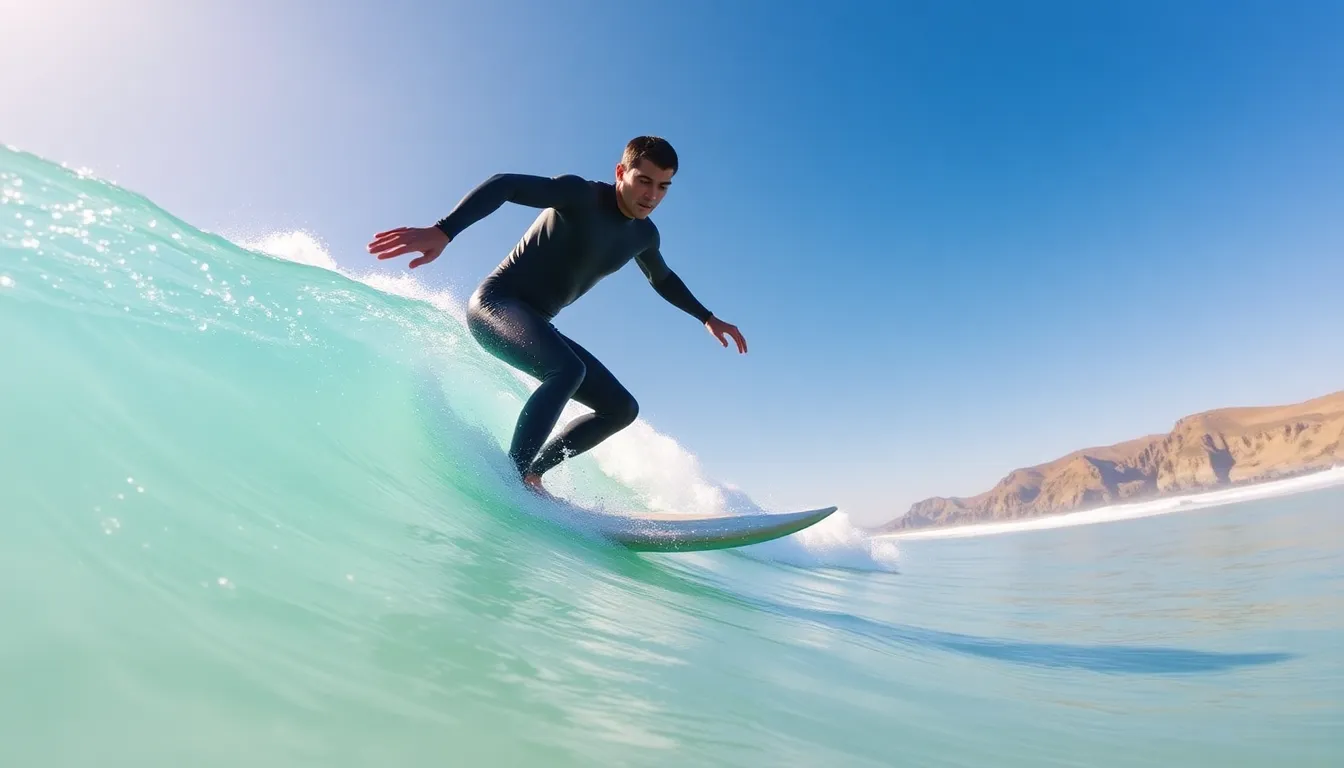
Balance determines how long a surfer stays on the wave. A low center of gravity provides stability. Knees stay bent, not locked. The body’s weight distributes evenly between both feet.
Surfers are either “regular” (left foot forward) or “goofy” (right foot forward). Neither stance is better, it comes down to what feels natural. A simple test: have someone gently push you from behind. Whichever foot steps forward first is likely your front foot.
Arms play an important role in balance. They stay loose and slightly extended, acting as counterweights during shifts. Stiff arms create tension throughout the body and make adjustments harder.
The surfboard’s sweet spot sits roughly in the center. Standing too far forward causes the nose to pearl (dive underwater). Standing too far back stalls the board and kills speed. Finding this balance point takes trial and error.
Beginners benefit from wider, longer boards. These offer more surface area and forgiveness. As surfing techniques improve, surfers graduate to shorter, more responsive boards. Rushing this progression leads to frustration.
Reading Waves and Timing Your Ride
Waves are not random. They follow patterns that experienced surfers learn to predict. Understanding wave behavior separates successful rides from missed opportunities.
Waves break in three main ways: beach breaks over sand, point breaks along headlands, and reef breaks over rock or coral. Each type produces different wave shapes. Beach breaks often shift with tides and storms. Point breaks offer more consistent takeoff zones.
The peak is where the wave first begins to crest. Surfers want to catch waves at or near the peak. From there, the wave peels left, right, or both directions. Reading this pattern before paddling saves wasted effort.
Timing requires patience. Paddling too early means the wave passes underneath. Paddling too late results in getting caught by the breaking lip. The ideal moment comes as the wave steepens behind the surfer. A few powerful strokes at this point slide the board into the wave’s face.
Sets arrive in groups, usually three to seven waves with lulls between. Watching a few sets before paddling out reveals the rhythm. This observation time is part of good surfing techniques, not just waiting around.
Turning and Maneuvering on the Wave
Once standing, surfers need to steer. Basic turns involve shifting weight and using the rails (edges) of the board. Leaning toward the toes engages the toe-side rail and turns the board one direction. Leaning toward the heels does the opposite.
Bottom turns happen at the base of the wave. The surfer drops down the face, compresses into a crouch, and redirects up toward the lip. This turn generates speed and sets up the next maneuver. Without a solid bottom turn, advanced surfing techniques remain out of reach.
Top turns redirect the surfer from the wave’s upper section back down. Weight shifts to the back foot while the upper body rotates toward the beach. The board follows where the shoulders point.
Cutbacks bring surfers back toward the curl when they’ve ridden too far onto the shoulder. This S-shaped turn maintains connection with the wave’s power source. It requires reading the wave and anticipating where energy will dissipate.
Beginners should focus on smooth, controlled turns before attempting sharp snaps or aerials. Each small improvement in turning opens new possibilities on the wave.