Table of Contents
ToggleSurfing captures the thrill of ocean waves and human balance in one exhilarating sport. Millions of people worldwide pursue surfing as a lifestyle, a fitness activity, or a competitive pursuit. This guide covers everything from surfing history to beginner equipment, basic techniques, top destinations, and essential safety tips. Whether someone dreams of catching their first wave or wants to understand the culture behind the sport, this article delivers the knowledge needed to start.
Key Takeaways
- Surfing originated in ancient Polynesia and gained global popularity thanks to Duke Kahanamoku’s demonstrations in the early 1900s.
- Beginners should start with a soft-top foam board (around 8 feet) for stability and practice the pop-up motion on dry land before hitting the water.
- Essential surfing gear includes a wetsuit, leash, surf wax, and sun protection—rent or borrow equipment before investing.
- Top surfing destinations include Hawaii, California, Australia, Indonesia, Portugal, Costa Rica, and South Africa, each offering waves for different skill levels.
- Ocean safety is critical: learn to recognize rip currents, follow surf etiquette by respecting wave priority, and always match wave conditions to your skill level.
- Patience pays off in surfing—most beginners need several sessions of practicing paddling and pop-ups before successfully riding their first wave.
The History and Origins of Surfing
Surfing began in ancient Polynesia hundreds of years ago. Hawaiian islanders practiced wave riding as both recreation and spiritual ritual. Chiefs and commoners alike built wooden boards and rode ocean swells along the coastlines.
When European explorers arrived in Hawaii during the 18th century, they witnessed surfing for the first time. Captain James Cook’s crew documented the practice in 1778. But, colonization and missionary influence suppressed surfing traditions for decades.
The sport experienced a revival in the early 1900s. Duke Kahanamoku, a Hawaiian Olympic swimmer, became surfing’s greatest ambassador. He demonstrated surfing techniques in California and Australia, sparking global interest. By the 1950s and 1960s, surfing had become a cultural phenomenon in the United States.
Modern surfing evolved through board design innovations. Balsa wood gave way to foam and fiberglass. Shortboards replaced longboards as the preferred choice for performance surfing. Today, the sport includes professional competitions, with surfing making its Olympic debut at the 2020 Tokyo Games.
Essential Surfing Equipment for Beginners
The right equipment makes learning surfing much easier. Beginners should start with a soft-top foam board. These boards offer stability, buoyancy, and forgiveness during falls. Most surf schools use 8-foot foam boards for new students.
A quality wetsuit protects against cold water and provides sun protection. Wetsuit thickness depends on water temperature. A 3/2mm wetsuit works well for moderate climates, while colder regions require 4/3mm or thicker options.
Leashes attach the surfboard to the rider’s ankle. This safety device prevents boards from drifting away after wipeouts and protects other surfers in the water. Never surf without a leash as a beginner.
Surf wax creates traction on the board’s deck. Riders apply wax before each session to prevent slipping. Different wax formulas exist for various water temperatures, tropical, warm, cool, and cold.
Additional surfing gear includes:
- Rash guards for sun and chafe protection
- Reef booties for rocky beach breaks
- Earplugs to prevent surfer’s ear
- Zinc sunscreen for face protection
Borrowing or renting surfing equipment before purchasing makes sense. This approach lets beginners test different board sizes and find what works best.
Basic Techniques to Get You Started
Learning surfing starts on dry land. Beginners should practice the pop-up motion repeatedly before entering the water. This movement takes the rider from lying prone to standing in one fluid action.
The pop-up sequence follows these steps:
- Lie flat on the board with hands beside the chest
- Push up quickly while bringing the back foot forward
- Plant the front foot between the hands
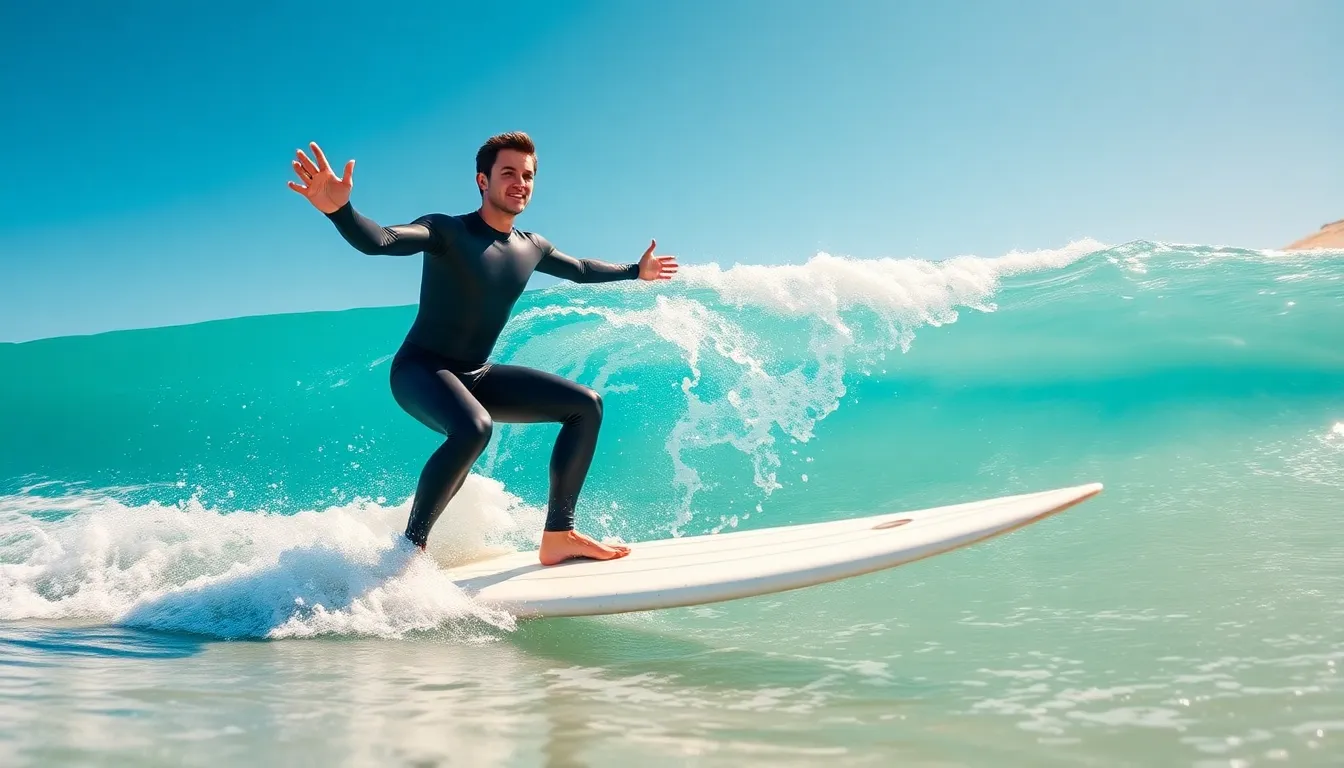
- Stand with knees bent and arms out for balance
Paddling technique determines surfing success. Strong, deep strokes propel the board through the water efficiently. Beginners should keep their body centered on the board with the nose slightly above the waterline.
Catching waves requires timing and positioning. Riders should start in waist-deep water with small whitewater waves. As a wave approaches, they paddle hard toward shore, feel the wave lift the board, then execute the pop-up.
Stance matters for control. Regular footers place their left foot forward, while goofy footers lead with the right. Neither stance is better, it comes down to personal comfort. Knees should stay bent throughout the ride for balance and maneuverability.
Surfing progression takes patience. Most beginners spend several sessions just practicing paddling and pop-ups before they ride a wave successfully. The learning curve rewards persistence.
Top Surfing Destinations Around the World
Hawaii remains surfing’s spiritual home. The North Shore of Oahu produces legendary winter swells that attract professional surfers from every continent. Waikiki Beach offers gentler waves perfect for beginners.
California delivers consistent surfing conditions year-round. Malibu, Huntington Beach, and Trestles rank among the most famous American surf spots. Southern California beaches suit all skill levels.
Australia boasts thousands of miles of surfing coastline. The Gold Coast features world-class point breaks like Snapper Rocks. Byron Bay and Bells Beach also draw international surfing crowds.
Indonesia offers warm water and powerful waves. Bali has become a surfing mecca with spots ranging from mellow beach breaks to challenging reef passes. Mentawai Islands provide remote, uncrowded perfection for experienced riders.
Portugal serves as Europe’s surfing capital. Nazaré holds the record for the largest wave ever surfed, over 80 feet tall. Peniche and Ericeira offer excellent conditions for intermediate and advanced surfers.
Costa Rica combines tropical climate with consistent Pacific swells. Tamarindo welcomes beginners, while Playa Hermosa challenges experts. The country’s surf culture continues to grow rapidly.
South Africa rounds out the top surfing destinations. Jeffreys Bay produces one of the world’s longest right-hand point breaks. Cape Town offers diverse waves within a stunning coastal setting.
Surfing Safety Tips and Ocean Awareness
Ocean awareness separates safe surfers from reckless ones. Understanding rip currents ranks as the most critical safety knowledge. These powerful channels pull swimmers and surfers away from shore. If caught in a rip, swimmers should paddle parallel to the beach rather than fighting against the current.
Surfing etiquette prevents collisions and conflicts. The surfer closest to the peak has priority on each wave. Dropping in on someone already riding constitutes a serious violation. Beginners should give way to more experienced surfers and avoid crowded lineups.
Weather and swell forecasting help surfers choose appropriate conditions. Websites and apps provide detailed surf reports for most beaches. Beginners should seek small, clean waves between 1 and 3 feet.
Marine life awareness protects surfers in certain regions. Stingrays inhabit shallow sandy areas, shuffling feet while walking prevents stings. Sharks rarely pose threats, but surfers should avoid dawn, dusk, and murky water in shark-prone areas.
Physical preparation reduces injury risk during surfing sessions. Stretching before paddling out warms up muscles. Swimming fitness directly translates to surfing ability. Stronger swimmers handle hold-downs and long paddles with less panic.
Sun protection deserves serious attention. Hours in the water expose skin to intense UV radiation. Waterproof sunscreen, rash guards, and hats between sessions prevent burns and long-term damage.
Knowing personal limits keeps surfers safe. Progression happens gradually. Attempting waves beyond current skill level leads to dangerous situations. Smart surfers build abilities systematically over time.